
Root Canal Treatment
We know the words “root canal” have a bad reputation. For decades, movies and TV shows have used them as the punchline for a painful experience. But here is the truth: root canals don’t cause pain; they relieve it.
If you are suffering from a severe toothache, sensitivity to hot or cold, or swelling, a root canal is often the hero of the story. It is the procedure that stops the hurt and allows you to keep your natural tooth. At our practice, we use modern techniques and gentle care to make this treatment as routine and comfortable as getting a filling.
What is a Root Canal?
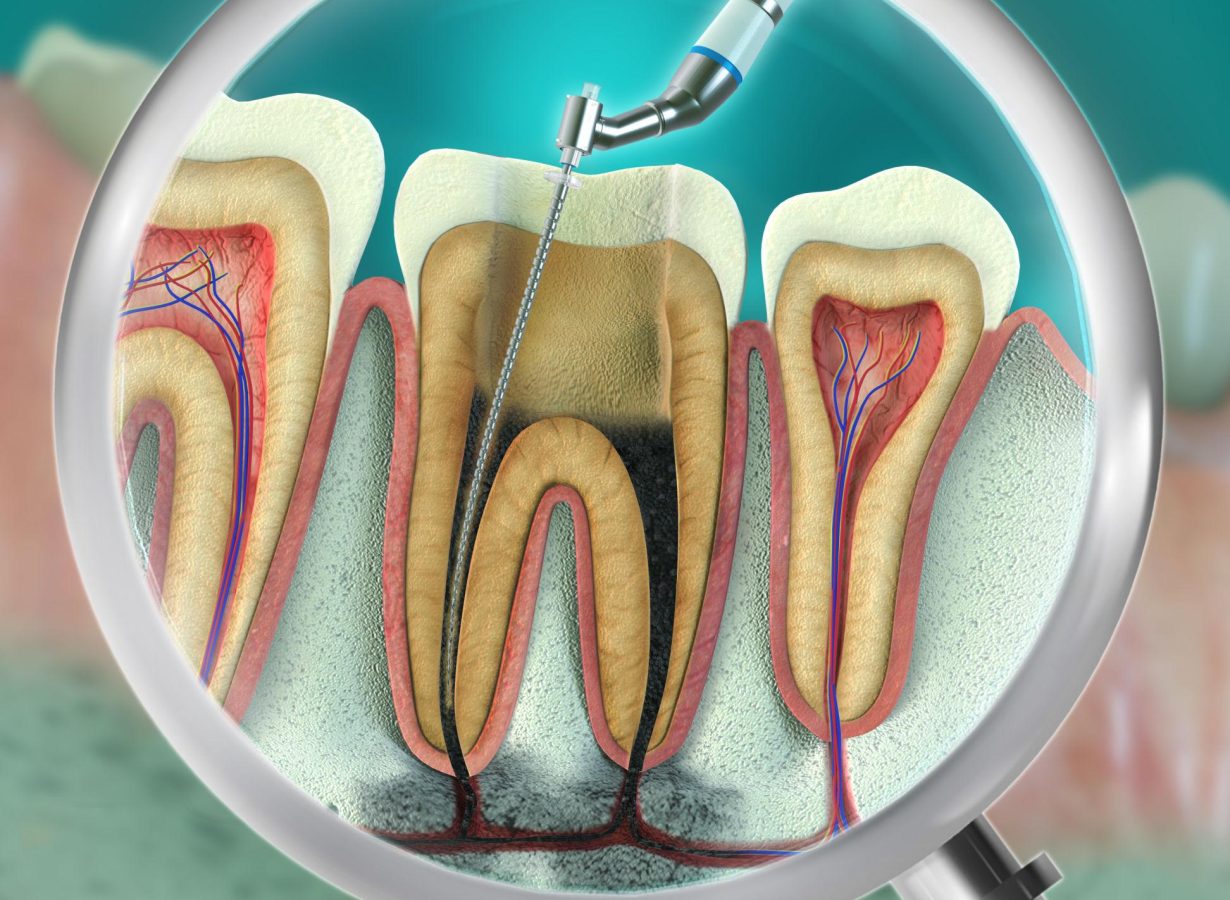
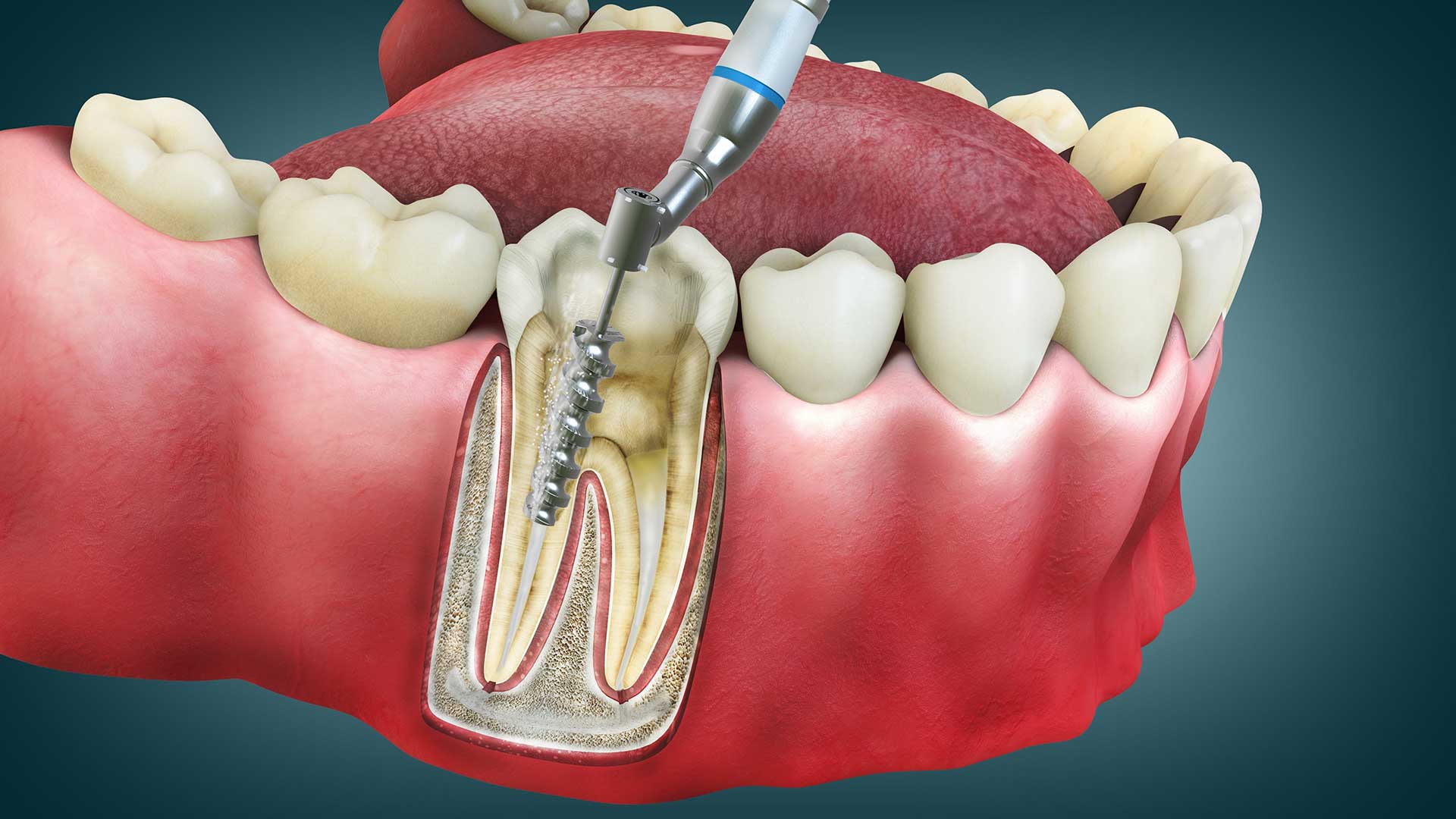
A soft tissue called the pulp lies inside every tooth, beneath the white enamel and a hard layer called dentin. This pulp contains blood vessels, nerves, and connective tissue. Your teeth grow during development because of the pulp.
Sometimes, bacteria can enter this pulp chamber due to deep decay, a crack in the tooth, or repeated dental procedures. In root canal therapy, we simply remove the infected pulp and then fill and seal the tooth.
Why Saving Your Natural Tooth Matters
You might wonder, “Why not just pull the tooth?” While extraction is sometimes necessary, nothing looks, feels, or functions quite like your natural tooth.
Saving your tooth with a root canal has several major benefits:
- Efficient Chewing: You maintain your normal biting force and sensation.
- Natural Appearance: Your smile stays intact without gaps.
- Protects Other Teeth: When a tooth is missing, surrounding teeth can shift out of place or become overworked.
Cost-Effective: Saving a natural tooth is often less expensive in the long run than extracting it and replacing it with an implant or bridge.
The Procedure: What to Expect
Knowledge gaps bring fear. After understanding the steps, you feel more at ease. Here you can find a simple breakdown of how we help you heal:
- Numbing and Comfort: First and foremost, we take care of your comfort, and then we use local anesthesia to numb the tooth and the surrounding area. You shouldn’t feel a thing during the procedure.
- Removing the Infection: A small opening is made in the top of the tooth to access the pulp chamber. Then infected or inflamed pulp is carefully removed.
- Cleaning and Shaping: After thoroughly cleaning the interior of the root canals to make sure no bacteria are left, the canal space is shaped.
- Filling and Sealing: Gutta-percha, a biocompatible substance, is filled in the empty space. This step seals the canals, and the chances of reinfection are reduced.
- Restoration: The tooth can be a bit brittle after the root canal. A crown or filling is placed on top to restore its full strength and function.
Breaking the Myths
Let’s clear a few common misconceptions.
- Myth: “Root canals are painful.”
- Fact: With modern anesthesia and technology, the procedure is no more uncomfortable than getting a deep filling. The pain comes from the infection before the treatment, not the treatment itself.
- Myth: “Pulling the tooth out is a better option.”
- Fact: It’s a complex process to replace a missing tooth. Keeping your natural tooth is almost always the best option for your long-term oral health.
- Myth: “Root canals cause illness.”
- Fact: This is an old myth based on debunked research from the 1920s. There is no valid scientific evidence linking root canals to disease elsewhere in the body.
- Myth: “Root canals are painful.”
Ready to Get Out of Pain?
If you are experiencing tooth pain, don’t wait. Ignoring the problem won’t make it go away, and the infection can spread. We are here to help you get back to a pain-free life.
Your concerns will be listened to by our compassionate team, and we will explain every step to help you to feel safe and cared for.
Don’t suffer in silence. Contact us today to schedule your consultation and save your smile.